
$89
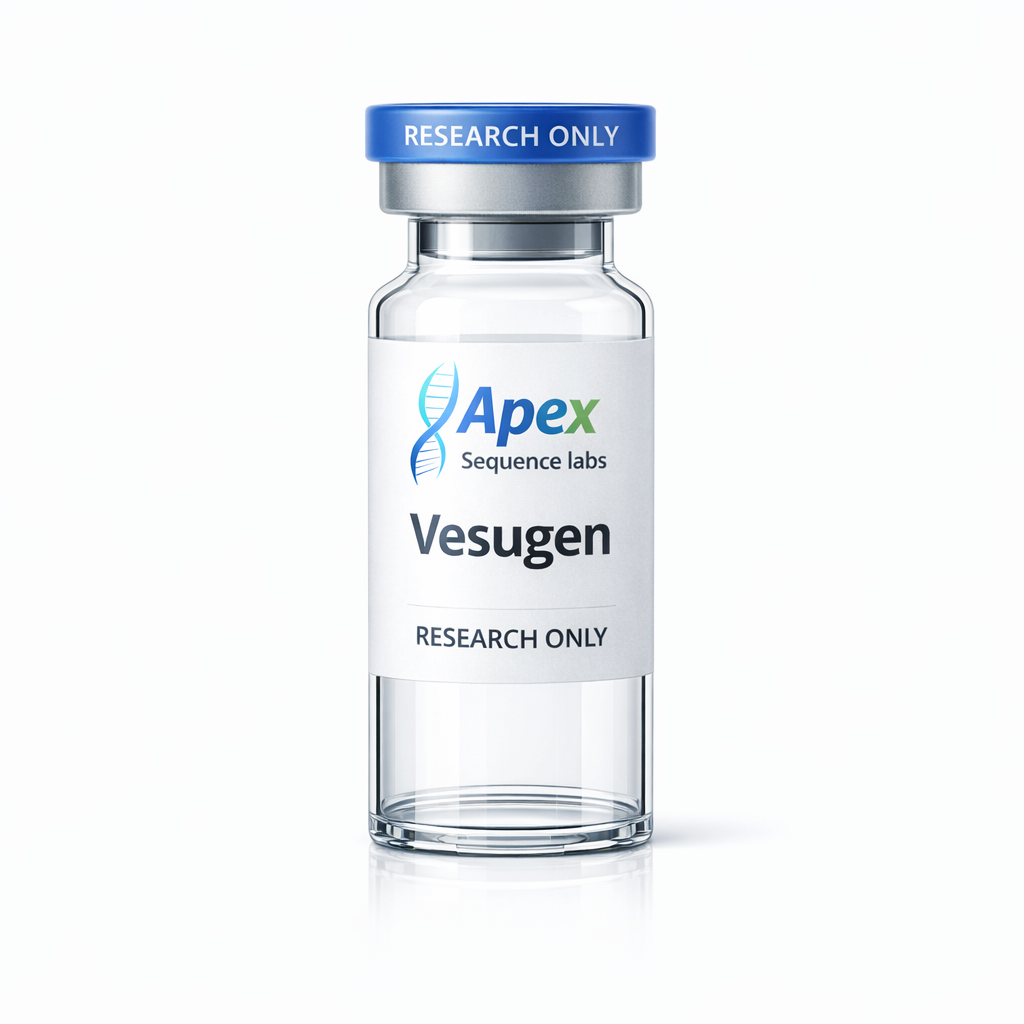
Vesugen Apex Sequence Labs
Vascular Bioregulatory Peptide | Lys-Glu-Asp Tripeptide | Research Peptide – pack of 10
118 in stock
Overview
Vesugen (Lys-Glu-Asp) is a synthetic bioregulatory tripeptide consisting of three amino acids Lysine, Glutamic Acid, and Aspartic Acid developed as part of the pioneering peptide bioregulator research programme conducted by Professor Vladimir Khavinson and the St. Petersburg Institute of Bioregulation and Gerontology. As a member of the Khavinson peptide family of short-chain cytomedines, Vesugen is specifically designed to target vascular tissue, with research suggesting it acts as a tissue-specific bioregulator of vascular endothelial and smooth muscle cell function. Vesugen represents one of a series of organ-specific tripeptides developed through decades of systematic research into the biological role of short peptide sequences in tissue regulation, gene expression modulation, and cellular homeostasis. Apex Sequence Labs offers Vesugen at the highest purity standards, rigorously tested and manufactured under strict quality control protocols to ensure consistency and reliability for advanced scientific investigation.
Molecular Profile
Full Name: Lys-Glu-Asp (Lysine-Glutamic Acid-Aspartic Acid)
Abbreviation: Vesugen / KED
Sequence: Lys-Glu-Asp
Single Letter Code: K-E-D
Molecular Formula: C??H??N?O?
Molecular Weight: 380.36 g/mol
CAS Number: 83706-22-3
Purity: 99% (HPLC verified)
Form: Lyophilized powder
Appearance: White to off-white powder
Research Origin: Khavinson Peptide Bioregulator Programme, St. Petersburg Institute of Bioregulation and Gerontology
Research Areas of Interest
Vesugen has been investigated primarily within the framework of Khavinson peptide bioregulator research, with studies exploring its tissue-specific effects on vascular biology, endothelial function, and cardiovascular health across a range of preclinical and clinical research contexts:
Vascular Endothelial Research The primary focus of Vesugen research centres on its putative role as a vascular tissue-specific bioregulator. Studies have explored its effects on endothelial cell function, endothelial nitric oxide synthase (eNOS) activity, vascular permeability, and endothelial integrity in preclinical models, with research suggesting that short peptide bioregulators of the Vesugen class may influence gene expression patterns in vascular endothelial cells through direct interaction with chromatin-associated regulatory elements.
Cardiovascular & Atherosclerosis Research Investigated in models of cardiovascular disease and atherosclerosis, research has explored Vesugen’s potential effects on vascular smooth muscle cell proliferation, lipid accumulation in arterial walls, inflammatory cell recruitment, and the progression of atherosclerotic lesions in preclinical models. Studies within the Khavinson bioregulator research framework have examined its potential role in supporting vascular wall integrity and attenuating age-related vascular remodelling.
Blood Pressure & Vascular Tone Research Studied for its potential effects on vascular smooth muscle tone and blood pressure regulation, with research exploring how Vesugen-class peptides may influence the endothelial regulation of vascular reactivity, nitric oxide bioavailability, and endothelin signalling in models of hypertension and vascular dysfunction.
Ageing & Vascular Gerontology Research As a product of the St. Petersburg Institute of Bioregulation and Gerontology’s systematic research programme into peptide-mediated tissue rejuvenation, Vesugen has been studied within the broader context of vascular ageing research. Studies have explored its effects on age-related endothelial dysfunction, vascular stiffness, and the molecular hallmarks of vascular senescence, contributing to Khavinson’s broader research thesis on short peptide bioregulators as modulators of biological ageing in specific tissue compartments.
Gene Expression & Epigenetic Research A central hypothesis of Khavinson peptide bioregulator research proposes that short tripeptides of the Vesugen class interact directly with DNA regulatory sequences and chromatin-associated proteins to modulate tissue-specific gene expression. Research has explored how KED and related peptides may influence transcription factor binding, histone modification patterns, and the expression of genes associated with endothelial function, vascular homeostasis, and cellular longevity in vascular tissue.
Microcirculation & Angiogenesis Research Investigated for its potential effects on microvascular function, capillary integrity, and angiogenic signalling pathways, with studies exploring Vesugen’s influence on vascular endothelial growth factor (VEGF) expression, endothelial cell migration and proliferation, and the formation of new microvascular networks in preclinical models of tissue ischaemia and wound healing.
Cerebrovascular Research Studied within the context of cerebrovascular biology and brain microcirculation, with research exploring Vesugen’s potential effects on blood-brain barrier integrity, cerebral blood flow regulation, and the vascular contributions to neurodegenerative and cognitive decline in ageing models. Its relevance to cerebrovascular disease research has been explored within the broader Khavinson peptide bioregulator framework.
Metabolic Vascular Research Investigated for its potential role in attenuating vascular complications associated with metabolic disease states, including diabetic vasculopathy, endothelial dysfunction in insulin resistance models, and the vascular consequences of chronic hyperglycaemia and dyslipidaemia in preclinical research settings.
Peptide Bioregulator & Cytomedine Research As part of the broader Khavinson cytomedine research programme, Vesugen contributes to the scientific investigation of tissue-specific short peptide bioregulators as a class, with research exploring the general principles of peptide-tissue specificity, the mechanisms of bioregulator-mediated gene expression modulation, and the potential of organ-targeted tripeptides as research tools for studying tissue homeostasis and biological ageing across multiple organ systems.
The Khavinson Peptide Bioregulator Research Framework
Vesugen’s scientific context is inseparable from the broader research legacy of Professor Vladimir Khavinson and the St. Petersburg Institute of Bioregulation and Gerontology, whose systematic investigation of short peptide bioregulators over several decades has produced one of the most extensive bodies of peptide gerontology research in the scientific literature:
Organ-Specific Peptide Isolation Khavinson’s research programme began with the systematic isolation of short peptide fractions from specific organ tissues, with each fraction demonstrating preferential biological activity in its tissue of origin a phenomenon termed tissue specificity
Cytomedine Classification Peptide bioregulators of the Vesugen class are classified as cytomedines naturally occurring, tissue-specific informational peptides that participate in intercellular communication and tissue homeostasis regulation
Tripeptide Synthesis Programme Following the identification of biologically active peptide fractions, Khavinson’s programme systematically synthesised and characterised the minimal active peptide sequences responsible for observed tissue-specific effects, yielding a library of short tripeptide bioregulators including Vesugen (KED), Epithalon (AEDG), Vilon (KE), Thymalin-derived peptides, and others
Gene Expression Hypothesis The central mechanistic hypothesis of Khavinson bioregulator research proposes that short peptides interact directly with specific DNA sequences particularly TATA-box and related promoter elements to modulate gene transcription in a tissue-specific manner, providing a potential molecular basis for observed organ-targeted biological effects
Gerontological Research Applications The Khavinson programme has systematically investigated peptide bioregulators across multiple organ systems as potential tools for studying and modulating biological ageing, with Vesugen representing the vascular-targeted member of this research family alongside cardiac-targeted (Chelohart), liver-targeted (Svetinorm), kidney-targeted (Renisamin), and other organ-specific peptide bioregulators
What Sets Vesugen Apart?
Vascular Tissue Specificity Among the Khavinson peptide bioregulator family, Vesugen is distinguished by its proposed specificity for vascular tissue, making it the primary research tool of choice for investigating short peptide bioregulator effects in cardiovascular and vascular biology research contexts
Minimal Active Sequence As a three amino acid peptide, Vesugen represents one of the smallest biologically active research peptides available, offering researchers a uniquely minimal molecular tool for studying peptide-mediated vascular regulation with reduced off-target complexity
Khavinson Research Legacy Backed by one of the most extensive peptide gerontology research programmes in scientific history, Vesugen benefits from a substantial body of peer-reviewed literature generated over decades of systematic investigation, providing researchers with a well-documented scientific foundation
Complementary to Epithalon Research As a fellow member of the Khavinson tripeptide bioregulator family, Vesugen is frequently studied alongside Epithalon (AEDG) and other cytomedines in multi-peptide bioregulator research protocols, enabling comparative investigation of tissue-specific versus systemic peptide bioregulator effects
Epigenetic Research Tool The proposed DNA-binding and gene expression modulating properties of Vesugen-class peptides position it as a potentially valuable tool for epigenetic research, particularly in studies examining how short peptide sequences influence chromatin structure and transcriptional regulation in vascular tissue
Quality Assurance
All Apex Sequence Labs peptides are:
Synthesized using advanced solid-phase peptide synthesis (SPPS)
Third-party tested via HPLC and Mass Spectrometry
Sequence and purity verified through analytical testing
Produced in a controlled, sterile, ISO-compliant laboratory environment
Supplied with a Certificate of Analysis (CoA) available upon request
Packaging & Storage
Available in: 5mg | 10mg | 20mg vials
Storage: Store lyophilized peptide at ?20°C away from light and moisture
Once reconstituted: Store at 4°C and use within 30 days
Recommended diluent: Sterile water for injection or bacteriostatic water
Shelf life: 24 months when stored correctly in lyophilized form
Why Choose Apex Sequence Labs?
– 99% purity guaranteed
– Independent third-party testing on every batch
– Certificate of Analysis provided
– Produced in ISO-compliant cleanroom facilities
– Fast, discreet shipping
– Dedicated researcher support team
– Research Use Only Disclaimer
Vesugen (Lys-Glu-Asp) supplied by Apex Sequence Labs is intended strictly for in vitro and in vivo laboratory research purposes only. This product is NOT intended for human or veterinary use, is NOT a drug or dietary supplement, and has NOT been evaluated or approved by the FDA or any other regulatory authority for therapeutic, diagnostic, or prophylactic use. By purchasing this product, the buyer confirms they are a qualified researcher and accepts full responsibility for its lawful and ethical use in accordance with all applicable local, state, and federal regulations.
| Dosage | 10mg |
|---|


Reviews
There are no reviews yet.