
£14
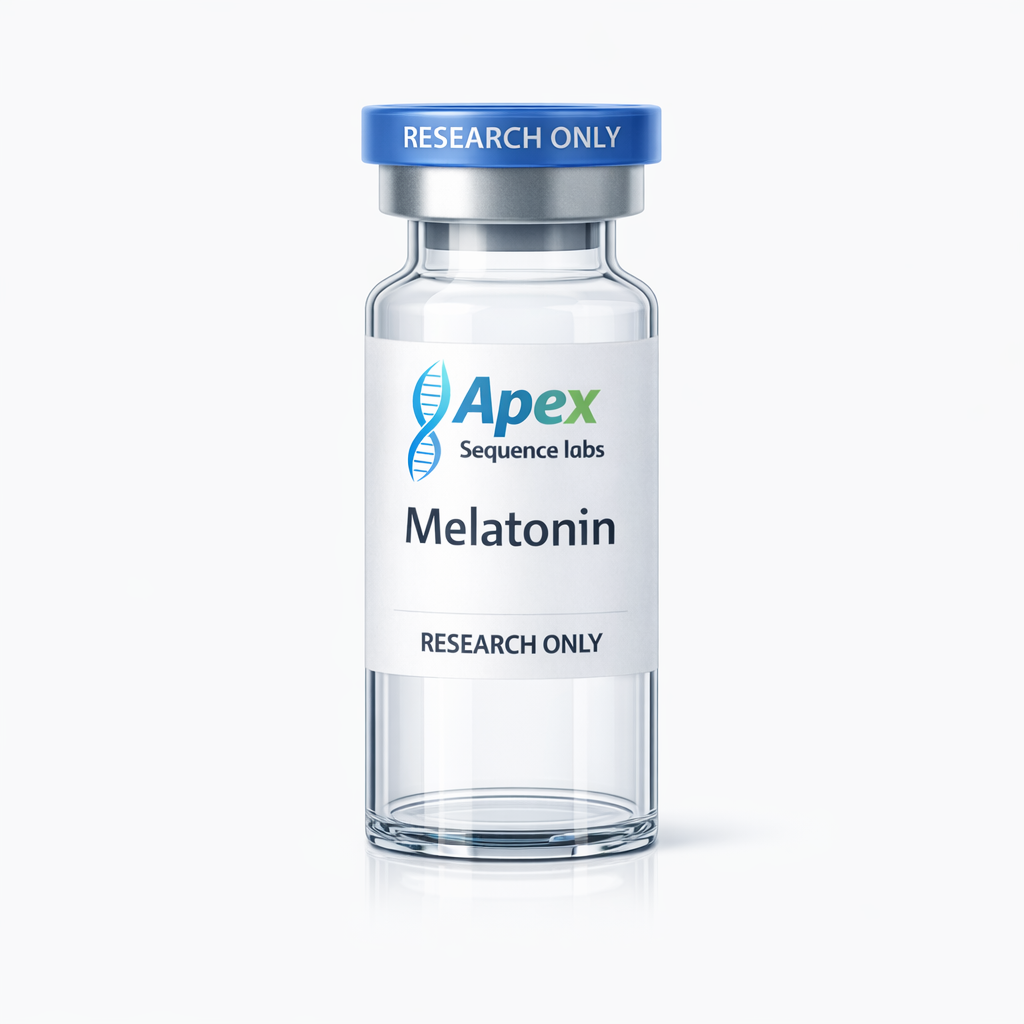
Melatonin 10mg| Apex Sequence Labs
N-Acetyl-5-Methoxytryptamine | Pineal Neurohormone | Research Compound
117 in stock
Here’s a compelling product listing description for Melatonin by Apex Sequence Labs:
Melatonin Apex Sequence Labs
N-Acetyl-5-Methoxytryptamine | Pineal Neurohormone | Research Compound
Overview
Melatonin (N-Acetyl-5-Methoxytryptamine) is a naturally occurring indoleamine neurohormone synthesised primarily by the pineal gland from the amino acid tryptophan via serotonin as an intermediate, and secreted in a precisely regulated circadian pattern that peaks during darkness and is suppressed by light exposure. As the principal hormonal output of the pineal gland and the primary endogenous signal of circadian time in mammals, melatonin occupies a uniquely central position in chronobiology, sleep science, and the broader regulation of seasonal and circadian biological rhythms. Beyond its canonical role as the body’s darkness signal and circadian time-keeper, melatonin has emerged as a compound of remarkable scientific versatility, with an extensive and rapidly expanding research profile spanning antioxidant biology, immunology, oncology, neuroprotection, mitochondrial research, reproductive biology, and cardiovascular science. Apex Sequence Labs offers Melatonin at the highest purity standards, rigorously tested and manufactured under strict quality control protocols to ensure consistency and reliability for advanced scientific investigation.
Molecular Profile
Full Name: N-Acetyl-5-Methoxytryptamine
Common Name: Melatonin
Molecular Formula: C??H??N?O?
Molecular Weight: 232.28 g/mol
CAS Number: 73-31-4
Purity: 99% (HPLC verified)
Form: Powder
Appearance: White to off-white crystalline powder
Solubility: Sparingly soluble in water; soluble in ethanol, DMSO, and lipid solvents
Receptors: MT1 (MTNR1A), MT2 (MTNR1B), MT3 (Quinone Reductase 2), ROR?/ROR? nuclear receptors
Biosynthetic Pathway: Tryptophan? 5-Hydroxytryptophan Serotonin N-Acetylserotonin Melatonin
Research Areas of Interest
Melatonin’s extraordinary breadth of biological activity across virtually every major organ system has established it as one of the most extensively studied and scientifically versatile research compounds in contemporary biomedical science:
Circadian Biology & Chronobiology Research As the principal hormonal signal of circadian time in mammals, melatonin occupies an irreplaceable position in chronobiology research. Studies have extensively investigated its role in entraining peripheral circadian clocks to the central suprachiasmatic nucleus (SCN) master clock, its regulation by the retinohypothalamic tract and light-dark cycle, its interaction with clock genes including CLOCK, BMAL1, PER, and CRY, and its function as a systemic circadian synchroniser across multiple tissue and organ systems. Melatonin’s precisely regulated nocturnal secretion profile and its receptor-mediated signalling in the SCN make it an indispensable research tool for studying circadian rhythm generation, entrainment, and disruption.
Sleep Research & Neuroscience Among the most extensively studied applications of melatonin, research has explored its role in sleep onset, sleep architecture, sleep quality, and the regulation of sleep-wake transitions through MT1 and MT2 receptor-mediated signalling in the SCN and other sleep-regulatory brain regions. Studies have investigated melatonin’s effects on REM and non-REM sleep stages, its interactions with adenosine and GABAergic sleep-promoting systems, its role in circadian sleep disorder models including delayed sleep phase syndrome, jet lag, and shift work disorder, and its potential relevance to sleep disturbances associated with ageing, neurodegenerative disease, and psychiatric conditions.
Antioxidant & Free Radical Research A scientifically distinctive and extensively studied dimension of melatonin biology, research has documented melatonin’s remarkable antioxidant properties through both receptor-mediated and receptor-independent mechanisms. As a direct free radical scavenger, melatonin has been shown to neutralise hydroxyl radicals, superoxide anions, hydrogen peroxide, singlet oxygen, and peroxynitrite with exceptional efficiency. Unlike classical antioxidants, melatonin initiates a cascade of antioxidant reactions the so-called antioxidant cascade in which its metabolites (cyclic 3-hydroxymelatonin, AFMK, AMK) retain antioxidant activity, amplifying its overall free radical scavenging capacity. Research has also documented melatonin’s ability to upregulate endogenous antioxidant enzymes including superoxide dismutase (SOD), glutathione peroxidase (GPx), and catalase through MT receptor-independent transcriptional mechanisms.
Mitochondrial Research An increasingly prominent frontier of melatonin science, research has explored its remarkable mitochondria-targeted antioxidant properties and its role in supporting mitochondrial function, integrity, and biogenesis. Studies have investigated melatonin’s accumulation within mitochondria at concentrations far exceeding plasma levels, its protection of mitochondrial membranes from oxidative damage, its preservation of mitochondrial membrane potential, its modulation of the mitochondrial permeability transition pore (mPTP), and its role in supporting electron transport chain efficiency and ATP synthesis under conditions of oxidative stress and metabolic dysfunction.
Neuroprotective & Neurological Research Extensively studied for its neuroprotective properties across a wide range of neurological research models, melatonin has been investigated for its potential relevance to neurodegenerative diseases including Alzheimer’s disease, Parkinson’s disease, Huntington’s disease, and amyotrophic lateral sclerosis (ALS). Research has explored its effects on amyloid-beta aggregation and tau hyperphosphorylation in Alzheimer’s models, alpha-synuclein aggregation in Parkinson’s models, neuroinflammation, excitotoxicity, oxidative neuronal damage, and the disrupted circadian patterns of melatonin secretion consistently observed in neurodegenerative disease populations.
Oncology & Cancer Biology Research One of the most extensive and scientifically complex areas of melatonin investigation, research has explored its oncostatic properties across multiple tumour types through diverse mechanisms including antioxidant protection of normal cells, modulation of oestrogen receptor signalling in hormone-sensitive cancers, inhibition of tumour angiogenesis and metastasis, enhancement of apoptosis in malignant cells, immunomodulation of anti-tumour immune responses, and disruption of the Warburg effect in cancer cell metabolism. Research has also extensively studied the relationship between circadian disruption, melatonin suppression, and cancer risk in shift work and light-at-night exposure models.
Immunological & Anti-Inflammatory Research Investigated for its significant immunomodulatory properties, including enhancement of innate and adaptive immune responses under immunosuppressive conditions, modulation of cytokine production and release, regulation of NK cell activity, promotion of Th1 versus Th2 immune balance, and anti-inflammatory effects through suppression of NF-?B signalling and pro-inflammatory cytokine production. Research has explored melatonin’s role in seasonal immune modulation, its interactions with the neuroendocrine-immune axis, and its potential relevance to autoimmune disease and chronic inflammatory condition research models.
Cardiovascular Research Studied for its cardioprotective and vasoprotective properties, including antioxidant protection of cardiomyocytes and vascular endothelium, modulation of blood pressure through MT1/MT2 receptor-mediated vascular effects, protection against ischaemia-reperfusion injury in cardiac tissue, reduction of oxidative stress in atherosclerosis models, anti-platelet aggregation effects, and its role in the circadian regulation of cardiovascular function. Research has explored melatonin’s effects on cardiac arrhythmia models, heart rate variability, and the circadian patterns of cardiovascular disease risk.
Reproductive Biology Research As a key regulator of seasonal reproductive cycles in photoperiodic mammals, melatonin has been extensively studied for its role in gonadotropin regulation, seasonal gonadal development and regression, and the timing of reproductive cycles in response to changing photoperiod. Research has also explored melatonin’s antioxidant protection of gametes, its role in sperm motility and function, oocyte maturation, embryo development, and placental function, as well as its interactions with sex hormone production and gonadal steroidogenesis.
Gastrointestinal Research Increasingly recognised as a significant gastrointestinal hormone, with the GI tract representing one of the largest extra-pineal sources of melatonin in the body, research has explored melatonin’s roles in gastrointestinal motility regulation, mucosal protection and barrier integrity, gut microbiome modulation, anti-inflammatory effects in inflammatory bowel disease models, and its interactions with the gut-brain axis and enteric nervous system circadian biology.
Metabolic & Endocrinological Research Investigated for its effects on glucose metabolism, insulin secretion, adipokine regulation, and metabolic syndrome markers, with research exploring melatonin’s interactions with MT1 and MT2 receptors in pancreatic beta cells, its role in the circadian regulation of metabolic processes, and its relationship with obesity, type 2 diabetes, and metabolic syndrome in preclinical and clinical research models. The identification of MTNR1B (MT2) gene variants as significant risk factors for type 2 diabetes has made melatonin receptor biology a particularly active area of metabolic research.
Bone Biology & Musculoskeletal Research Studied for its effects on bone metabolism, osteoblast and osteoclast function, bone mineral density, and the circadian regulation of bone remodelling. Research has explored melatonin’s antioxidant protection of bone tissue, its potential role in age-related bone loss and osteoporosis models, and its interactions with the HPA axis and glucocorticoid-mediated effects on bone health.
Ageing & Longevity Research As one of the most comprehensively studied anti-ageing research compounds, melatonin has been investigated in the context of its age-related decline in pineal secretion, its relationship with the hallmarks of biological ageing including oxidative stress accumulation, mitochondrial dysfunction, genomic instability, and circadian rhythm deterioration, and its potential as a research tool for studying interventions that modulate the biology of ageing across multiple organ systems simultaneously.
Melatonin Receptor Pharmacology
Understanding melatonin research requires familiarity with its receptor subtypes and signalling mechanisms:
MT1 (MTNR1A) High affinity Gi-coupled GPCR expressed in the SCN, pituitary, retina, and peripheral tissues; mediates circadian phase-shifting effects and inhibition of SCN neuronal firing; primary mediator of sleep-promoting effects
MT2 (MTNR1B) Gi-coupled GPCR expressed in the SCN, retina, immune cells, and pancreatic beta cells; mediates circadian phase-shifting, retinal dopamine inhibition, and pancreatic insulin secretion modulation; site of T2D-associated genetic variants
MT3 (Quinone Reductase 2) Non-GPCR binding site with antioxidant enzyme activity; mediates some of melatonin’s direct antioxidant and cytoprotective effects
ROR?/ROR? Nuclear Receptors Melatonin acts as a ligand for retinoic acid-related orphan receptors, providing a direct nuclear receptor-mediated mechanism for gene expression regulation independent of membrane receptor signalling; relevant to immune regulation and circadian clock gene modulation
Biosynthesis & Metabolism
Synthesis: Tryptophan (TPH) 5-HTP (AADC) Serotonin (AANAT) N-Acetylserotonin ?(ASMT/HIOMT) Melatonin
Rate-limiting enzyme: Arylalkylamine N-acetyltransferase (AANAT), regulated by sympathetic noradrenergic input from the SCN
Primary metabolism: Hepatic CYP1A2-mediated hydroxylation to 6-hydroxymelatonin sulphate (major urinary metabolite)
CNS metabolism: Oxidative pyrrole ring cleavage to AFMK and AMK (antioxidant metabolites)
Extra-pineal sources: GI tract, retina, bone marrow, lymphocytes, skin each capable of local melatonin synthesis independent of pineal output
Quality Assurance
All Apex Sequence Labs research compounds are:
Produced using validated synthesis and purification protocols
Third-party tested via HPLC and Mass Spectrometry
Tested for heavy metals, residual solvents, and related impurities
Produced in a controlled, sterile, ISO-compliant laboratory environment
Supplied with a Certificate of Analysis (CoA) available upon request
Packaging & Storage
Available in: 100mg | 500mg | 1000mg
Storage: Store at room temperature (15°C 25°C) in a cool, dry place, protected from light
Stability: Sensitive to light and moisture store in original packaging with desiccant
Solubility note: For aqueous research applications, dissolve in a small volume of ethanol or DMSO first, then dilute with aqueous buffer to desired concentration
Shelf life: 36 months when stored correctly
Why Choose Apex Sequence Labs?
– 99% purity guaranteed
– Independent third-party testing on every batch
– Certificate of Analysis provided
– Heavy metal & impurity tested
– Produced in ISO-compliant facilities
– Fast, discreet shipping
– Dedicated researcher support team
– Research Use Only Disclaimer
Melatonin supplied by Apex Sequence Labs is intended strictly for in vitro and in vivo laboratory research purposes only. This product is NOT intended for human or veterinary use as a supplement or therapeutic agent, is NOT a drug or dietary supplement in this context, and the research-grade melatonin supplied by Apex Sequence Labs is manufactured to research compound specifications. By purchasing this product, the buyer confirms they are a qualified researcher and accepts full responsibility for its lawful and ethical use in accordance with all applicable local, state, and federal regulations.

Reviews
There are no reviews yet.